
AWS IAM Assume Role Vulnerabilities Found in Many Top Vendors

Research by Praetorian has uncovered a common misconfiguration in Amazon Web Services Identity and Access Management Assume Role process. This post outlines the issue and how it can be mitigated.
What is Threat Modeling, and Why it’s Important

What is Threat Modeling, why it’s valuable to organizations, and when it should be used?
10 Cybersecurity Technical Priorities for Telework
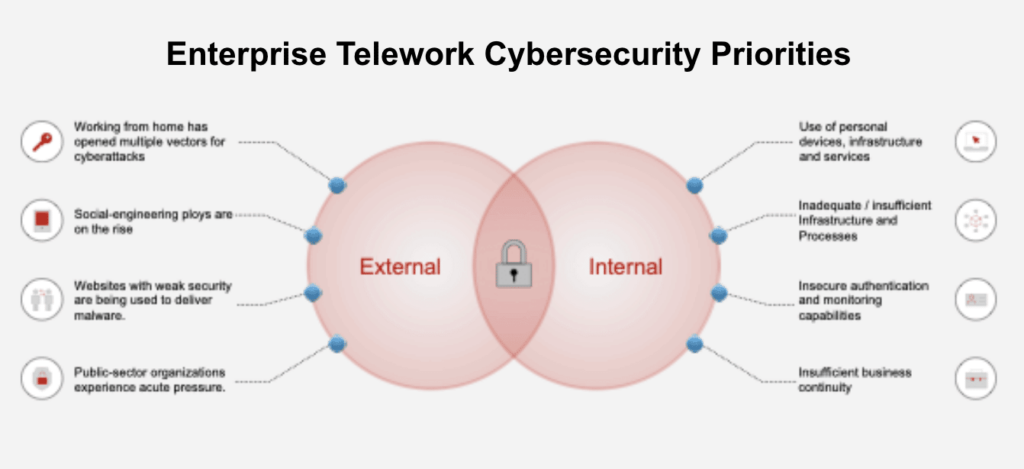
As Telework becomes a new normal, cybersecurity professionals must consider the greater attack surface. This article suggests the top focus areas for consideration.
Evaluating SAST Tools
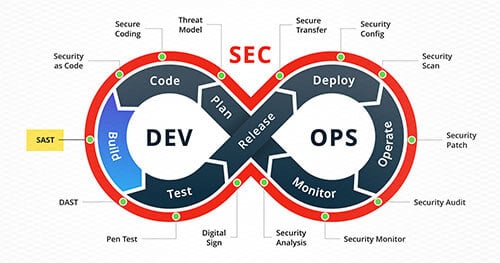
In this article, we aim to provide guidance for organizations that have decided to integrate a SAST tool into their CI/CD pipeline and outline important things to consider before acquiring one.
Implementing Application Whitelisting with Google Santa and Upvote (Part 1 of 2)
In this post, we are going to take a real-life example of implementing application whitelisting inside of Praetorian and the challenges that were overcome.
Red Team Supply Chain Attacks in Modern Software Development Environments
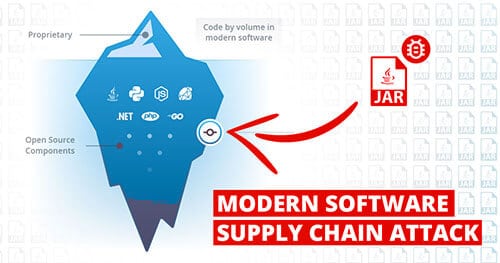
The future of red teaming not only requires updated adversarial tradecraft – although that’s a big part of it – but also a shift in buyer mindset to scope realistic scenarios that continue to test and challenge their defences.
Why Praetorian Benchmarks to MITRE ATT&CK™ and Why You Should Too
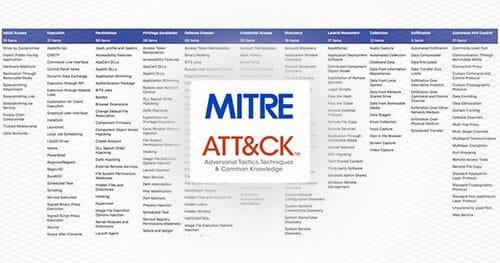
When it came to improving our Purple Team service line, which maps to “Detect” and “Respond” in the NIST CSF, we wanted to provide a similar high quality of data and metrics to our clients. In our experience, it is hard to drive change in any organization unless those changes can be tied to measurable results. After conducting a survey of known frameworks, we settled on the ATT&CK™ framework from MITRE.
Safely Conduct Security Assessments of Industrial Control System (ICS) Environments

Our current standard of living is made possible due to the massive scale of critical infrastructure that supports our needs as a society. Electricity, Oil, Gas, Water, and Security are a few of the well-known industries whose infrastructure is managed by Industrial Control Systems (ICS). Few systems have the potential for catastrophic consequences from a security incident as is possible with an ICS breach.
Benchmarking Enterprise Cybersecurity Programs with NIST CSF
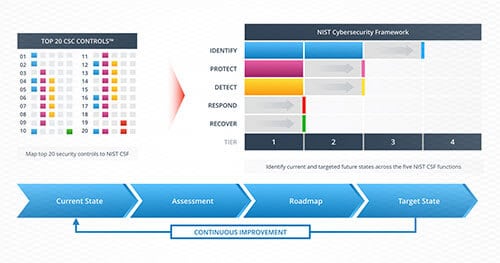
Benchmarking enterprise cybersecurity programs with NIST Cybersecurity Framework (CSF) helps organizations strengthen their security posture.
Summary of April MITRE ATT&CK RELEASE
MITRE’s Adversarial Tactics, Techniques, and Common Knowledge (ATT&CK™) is a curated knowledge base and model for cyber adversary behavior, reflecting the various phases of an adversary’s lifecycle and the platforms they are known to target. ATT&CK is useful for understanding security risk against known adversary behavior, for planning security improvements, and verifying defenses work as expected.