
FreeBSoD: Leveraging Language Models to Find and Exploit Kernel Bugs (Part 2 of 2)

Overview In the first installment of this series, I walked through how I leveraged large language models to assist in identifying several vulnerabilities in the FreeBSD kernel, including a stack-based buffer overflow assigned CVE-2026-3038. This raised a natural follow-up question. Can language models effectively write exploits for memory corruption vulnerabilities? This article explores that question. […]
GhostPack Necromancy: Reforging C# Tools with WasmForge

In the previous post we walked through WasmForge, our Go-to-WebAssembly loader that takes existing signatured Go tools and ships them as opsec-safe binaries. This approach doesn’t just apply to Go, however, as there are many languages that can compile to WebAssembly. Another language of interest to us, especially regarding legacy tools which have been over-signatured, […]
FreeBSoD: Leveraging Language Models to Find and Exploit Kernel Bugs (Part 1 of 2)

Overview Earlier this year, a team at Praetorian was building Constantine, our automated 0-day discovery engine. I wanted to find techniques worth folding into it, so on the side I started poking at the FreeBSD kernel with Claude Code, running on Opus 4.6, which was the latest Opus model at the time. A few days […]
Centurion: Bring Your Own Execution Environment

Writing my own virtualized loader is something I’ve been wanting to do since I first read Microsoft’s deep dive on FinFisher’s multi-layered VM obfuscation back in 2018. FinFisher didn’t just use one layer of protection, it implemented a custom virtual machine with 32 opcode handlers, wrapped that in spaghetti code and anti-debug checks, and then buried a second VM […]
When Encryption Isn’t Really Encryption

Discovery During a recent network security assessment, we were working on an environment that was well-hardened – Patching was current, password policies were strong, and network segmentation was in place. So, as part of our enumeration of all network assets, we started looking for default credentials and this led us to multiple Canon enterprise printers […]
Your Login Page Is Lying: What AI Agents Find When They Read Your Frontend
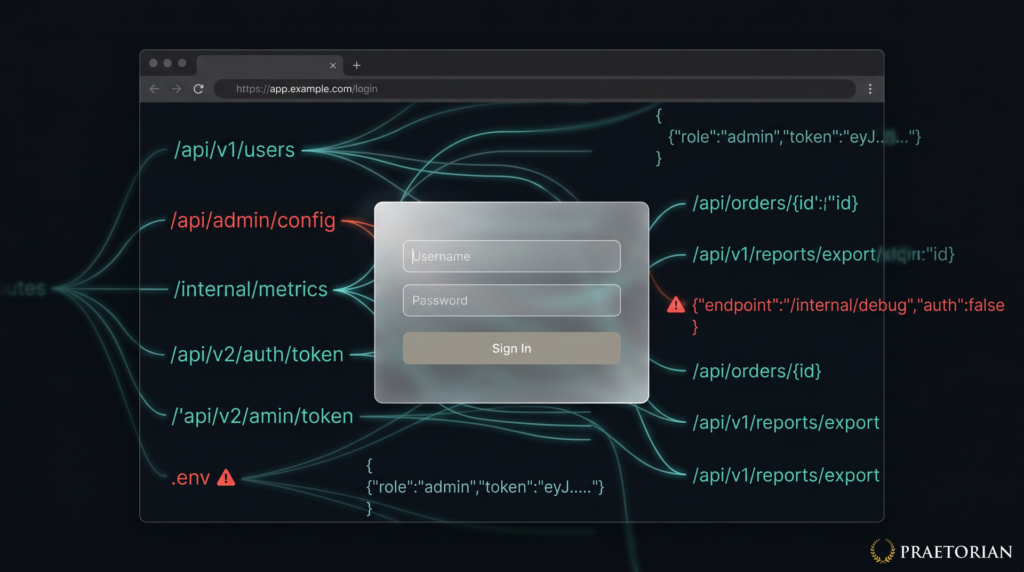
TL;DR: Single-page applications ship their entire frontend codebase to every visitor, including unauthenticated ones. Even a login page with no visible functionality delivers JavaScript bundles containing route definitions, API endpoint URLs, authentication logic, data models, and sometimes hardcoded secrets. As part of Guard’s continuous penetration testing, we use AI-assisted tooling to extract this information and […]
500,000 Vulnerabilities, 14 That Matter: How Exploit Chain Analysis Cuts Through the Noise

When 500,000 Findings Hide 14 Real Threats Modern enterprises ingest vulnerability data from dozens of sources: endpoint detection and response platforms, vulnerability scanners, cloud security posture tools, container image scanners. A large organization can easily accumulate hundreds of thousands of individual findings. The standard response is to sort by CVSS score, filter for criticals, and […]
Reflecting on Your Tier Model: CVE-2025-33073 and the One-Hop Problem

The False Sense of Security SMB signing on domain controllers has become standard practice across most Active Directory environments. But this hardening may have created a false sense of security. CVE-2025-33073 changes the calculus by removing the prerequisite of admin access, enabling NTLM relay attack Active Directory exploitation through unconstrained delegation. Domain controllers enforce SMB […]
Which Came First: The System Prompt, or the RCE?

During a recent penetration test, we came across an AI-powered desktop application that acted as a bridge between Claude (Opus 4.5) and a third-party asset management platform. The idea is simple: instead of clicking through dashboards and making API calls, users just ask the agent to do it for them. “How many open tickets do […]
Azure APIM Signup Bypass: 97.9% of Developer Portals Still Exploitable Anonymously and from the Internet
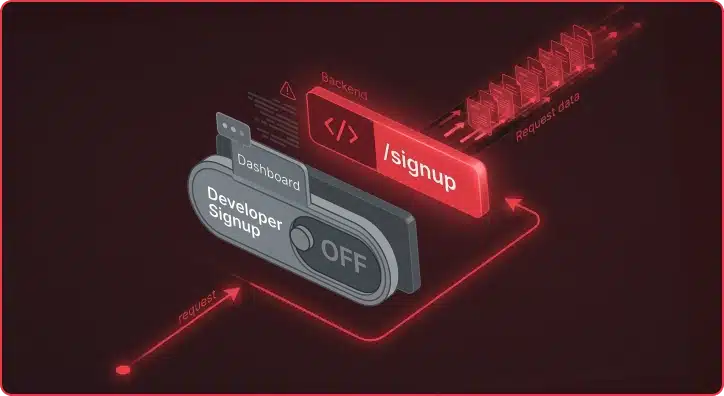
The Azure APIM signup bypass is a critical vulnerability affecting 97.9% of internet-facing Developer Portals. Azure API Management (APIM) exposes APIs to external consumers through a Developer Portal, the interface where developers self-register, obtain API keys, and make API calls. The default APIM configuration ships with Basic Authentication enabled as the identity provider and the […]