
Hannibal Puts Autonomous Penetration Testing Under Your Control
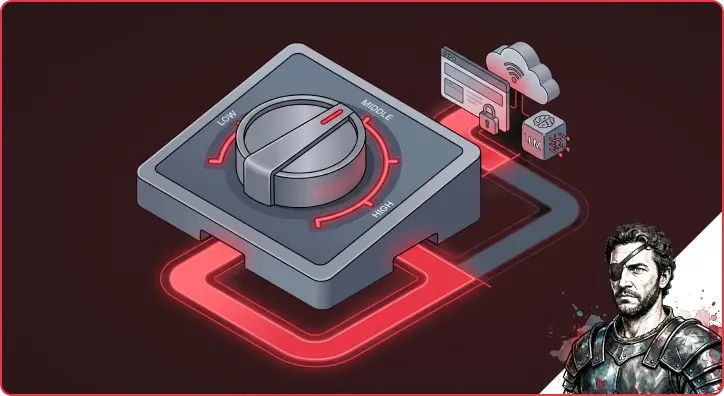
Autonomous penetration testing in the Praetorian Guard Platform has changed shape. Hannibal started as a hunt agent for external and cloud attack surfaces. Today, it’s something your security team can run entirely on its own terms. Web applications and LLM endpoints are now first-class attack surfaces. Hunts can authenticate into applications, test what a real […]
Credentials Are Still the Shortest Path In
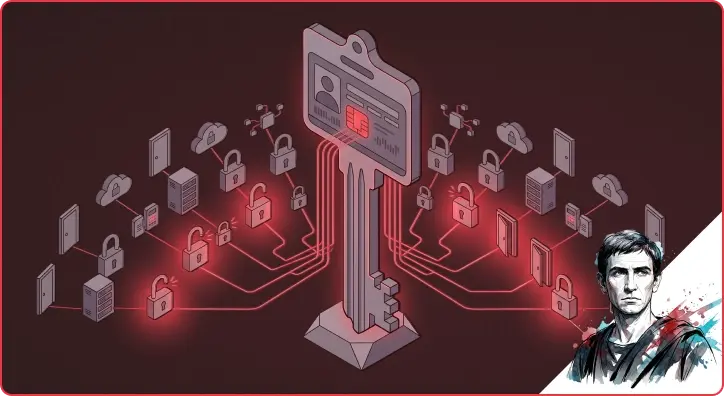
How Brutus grew into an engine that finds your identities, tests them everywhere they’re accepted, and remembers what it confirms. An attacker rarely needs a novel exploit when a valid username and password pair is sitting in a breach dump, reused across a dozen internal services, or left at a vendor default nobody changed. Brutus […]
Bluetooth Low Energy Security Testing, Consolidated: Introducing Caeruleus

The Bluetooth Low Energy (BLE) tooling space is fragmented and decaying. Picture a typical BLE testing session: you spin up bettercap to run ble.recon and ble.enum, your trusty (but deprecated) gatttool to read and write handles, and, when it’s time to fuzz that one writable characteristic, dig up that custom Bleak script you copy-paste between […]
FreeBSoD: Leveraging Language Models to Find and Exploit Kernel Bugs (Part 2 of 2)

Overview In the first installment of this series, I walked through how I leveraged large language models to assist in identifying several vulnerabilities in the FreeBSD kernel, including a stack-based buffer overflow assigned CVE-2026-3038. This raised a natural follow-up question. Can language models effectively write exploits for memory corruption vulnerabilities? This article explores that question. […]
Knossos: Procedurally Generated Decoy Environments
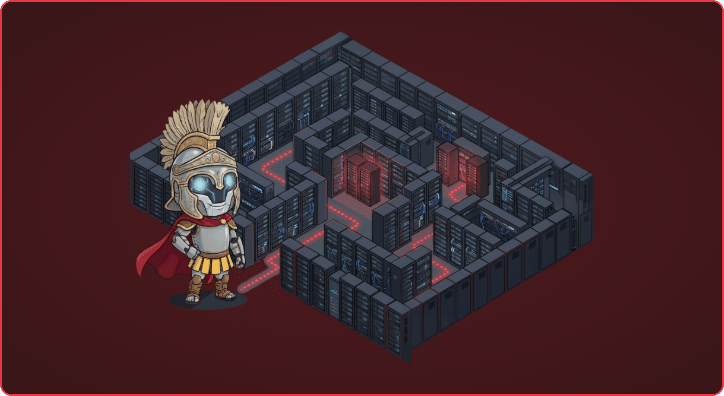
How we built a procedural engine that learns your real cloud environment, generates decoy environments indistinguishable from production, and converts every attacker interaction into signal. In the myth, Daedalus built the Labyrinth of Knossos so well that he nearly couldn’t escape it himself. The corridors looked real. The paths felt purposeful. And the deeper you […]
GhostPack Necromancy: Reforging C# Tools with WasmForge

In the previous post we walked through WasmForge, our Go-to-WebAssembly loader that takes existing signatured Go tools and ships them as opsec-safe binaries. This approach doesn’t just apply to Go, however, as there are many languages that can compile to WebAssembly. Another language of interest to us, especially regarding legacy tools which have been over-signatured, […]
FreeBSoD: Leveraging Language Models to Find and Exploit Kernel Bugs (Part 1 of 2)

Overview Earlier this year, a team at Praetorian was building Constantine, our automated 0-day discovery engine. I wanted to find techniques worth folding into it, so on the side I started poking at the FreeBSD kernel with Claude Code, running on Opus 4.6, which was the latest Opus model at the time. A few days […]
Centurion: Bring Your Own Execution Environment

Writing my own virtualized loader is something I’ve been wanting to do since I first read Microsoft’s deep dive on FinFisher’s multi-layered VM obfuscation back in 2018. FinFisher didn’t just use one layer of protection, it implemented a custom virtual machine with 32 opcode handlers, wrapped that in spaghetti code and anti-debug checks, and then buried a second VM […]
Enter the WasmForge: Compiling Sliver into WebAssembly

In our last post we used a Claude skill to systematically beat down VirusTotal detection rates on offensive security tools, with a brief mention of a new loader we’d been using to apply those techniques in bulk. This post is about that loader, which we call WasmForge. WasmForge is, from the user’s perspective, a build […]
When Encryption Isn’t Really Encryption
Discovery During a recent network security assessment, we were working on an environment that was well-hardened – Patching was current, password policies were strong, and network segmentation was in place. So, as part of our enumeration of all network assets, we started looking for default credentials and this led us to multiple Canon enterprise printers […]