
GhostPack Necromancy: Reforging C# Tools with WasmForge

In the previous post we walked through WasmForge, our Go-to-WebAssembly loader that takes existing signatured Go tools and ships them as opsec-safe binaries. This approach doesn’t just apply to Go, however, as there are many languages that can compile to WebAssembly. Another language of interest to us, especially regarding legacy tools which have been over-signatured, […]
FreeBSoD: Leveraging Language Models to Find and Exploit Kernel Bugs (Part 1 of 2)

Overview Earlier this year, a team at Praetorian was building Constantine, our automated 0-day discovery engine. I wanted to find techniques worth folding into it, so on the side I started poking at the FreeBSD kernel with Claude Code, running on Opus 4.6, which was the latest Opus model at the time. A few days […]
Sharing is Caring: SMB Secret Scanning with Sulla
TL;DR: Sulla is an open source SMB secret scanner for discovering credentials exposed in SMB shares across enterprise networks. It leverages our recently released Titus Go library, resulting in an easy-to-use, adaptable, and highly performant standalone binary. Every network penetration tester knows the struggle: reviewing network shares for sensitive material is a painful must-do. With […]
Centurion: Bring Your Own Execution Environment
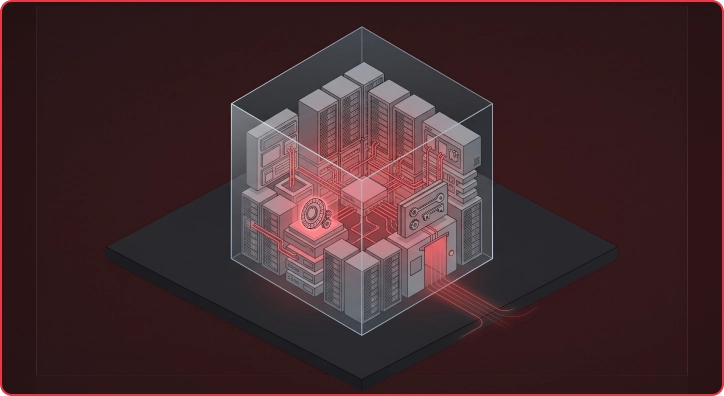
Writing my own virtualized loader is something I’ve been wanting to do since I first read Microsoft’s deep dive on FinFisher’s multi-layered VM obfuscation back in 2018. FinFisher didn’t just use one layer of protection, it implemented a custom virtual machine with 32 opcode handlers, wrapped that in spaghetti code and anti-debug checks, and then buried a second VM […]
Enter the WasmForge: Compiling Sliver into WebAssembly

In our last post we used a Claude skill to systematically beat down VirusTotal detection rates on offensive security tools, with a brief mention of a new loader we’d been using to apply those techniques in bulk. This post is about that loader, which we call WasmForge. WasmForge is, from the user’s perspective, a build […]
When Encryption Isn’t Really Encryption
Discovery During a recent network security assessment, we were working on an environment that was well-hardened – Patching was current, password policies were strong, and network segmentation was in place. So, as part of our enumeration of all network assets, we started looking for default credentials and this led us to multiple Canon enterprise printers […]
Adversarial Oracles: LLM-Guided EDR Signature Reduction

In previous blog posts we’ve talked about getting nerd sniped. Today we’re going to talk about a kind of nerd sniping that any offensive security tool creator is familiar with; when your tool gets signatured. This normally kicks off a frustrating spiral of back and forth changes between the tool author and security vendors until […]
Your Login Page Is Lying: What AI Agents Find When They Read Your Frontend
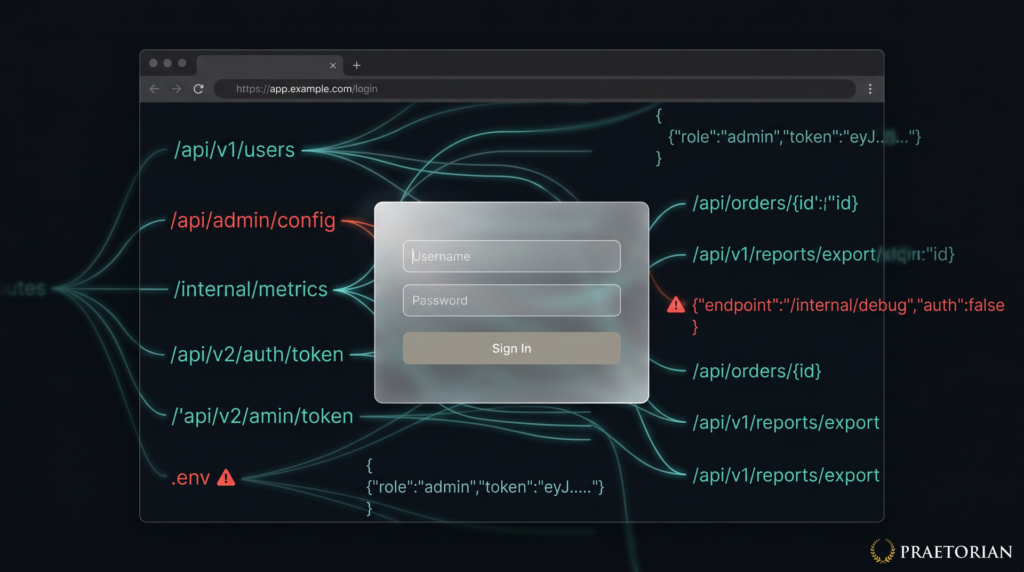
TL;DR: Single-page applications ship their entire frontend codebase to every visitor, including unauthenticated ones. Even a login page with no visible functionality delivers JavaScript bundles containing route definitions, API endpoint URLs, authentication logic, data models, and sometimes hardcoded secrets. As part of Guard’s continuous penetration testing, we use AI-assisted tooling to extract this information and […]
Shadow Admins in Active Directory: Hidden Privilege Paths Attackers Exploit
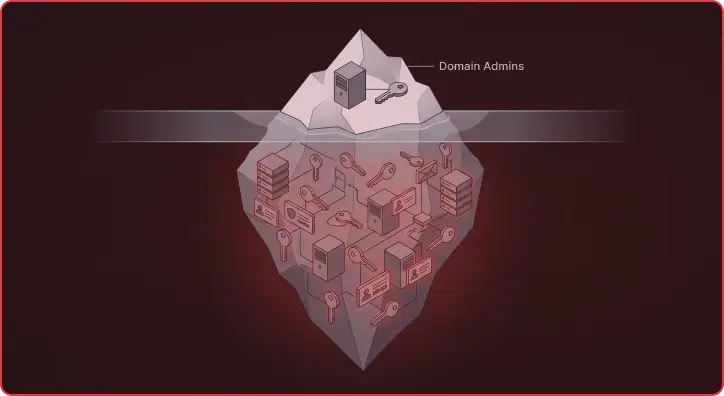
What Are Shadow Admins in AD? A common problem we encounter within many customer Active Directory environments are accounts that, at first glance, may appear innocuous, but that actually have hidden administrative privileges or unrolled privileges equivalent to those of a domain administrator account. We call these accounts shadow domain admins. These accounts don’t show […]
Julius v0.2.0: From 33 to 63 Probes — Now Detecting Cloud AI, Enterprise Inference, and RAG Pipelines

TL;DR: Julius v0.2.0 nearly doubles LLM fingerprinting probe coverage from 33 to 63, adding detection for cloud-managed AI services (AWS Bedrock, Azure OpenAI, Vertex AI), high-performance inference servers (SGLang, TensorRT-LLM, Triton), AI gateways (Portkey, Helicone, Bifrost), and self-hosted RAG platforms (PrivateGPT, RAGFlow, Quivr). This release also hardens the scanner itself with response size limiting and […]