
Evaluating SAST Tools

In this article, we aim to provide guidance for organizations that have decided to integrate a SAST tool into their CI/CD pipeline and outline important things to consider before acquiring one.
Cross-Site Websocket Hijacking (CSWSH)

The WebSocket protocol is a fairly simple one; regardless, understanding how it works is essential to understanding how to secure (and exploit) it. The protocol is comprised of two parts: a handshake and the data transfer.
Breaking Through Single Sign On (SSO)
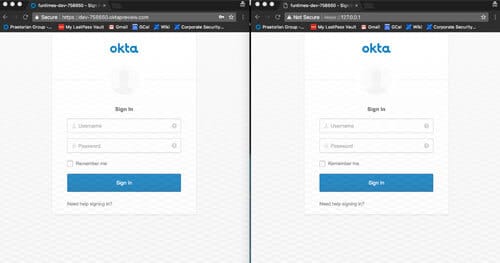
During my internship with Praetorian, I was able to create a new tool—Okta Watering Hole—that was used on some of the red team engagements. I created this tool because our team ran into the issue of not being able to get past two factor authentication on various web portals—so this is how we got around that. Okta Watering Hole sets up a carbon copy of a target Okta site and begins to capture credentials and sessions of visitors. This can be used to check how a company’s procedures and policies stand up to the “next generation” phishing attacks we are beginning to see. This new tool supports traditional phishing attacks as well as targeting two factor authentication devices—meaning perimeter security has to work double time.
Path.Combine Security Issues in ASP.NET Applications
Path traversal vulnerabilities are a common class of web application vulnerability, where an attacker aims to access files outside of the intended directory by using “../” patterns to traverse directories or by using absolute paths. These vulnerabilities are commonly found in file upload or download functionality of an application.
Well-tested Authorization Design Patterns

Authorization is a strange beast. In theory, it appears to be rather straight-forward: a user should not be able to create, read, update, or delete data that it does not have access to. However, from our experience, theory tends to deviate from practice. Missing or incorrect access controls are a dime a dozen for applications we test and this very rarely stems from a complete lack of access controls. More often then not, authorization issues spring up during assessments where the application manages a complex authorization model and an incorrect assumption was made or an edge case was missed. Conversely, we have seen applications that have incredibly complicated authorization models that have zero access control problems.
An Opinionated Series on Why Signal Protocol is Well-Designed: Deniability
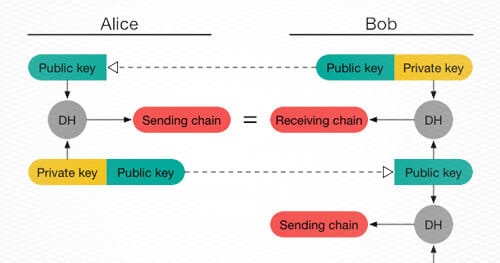
In my previous blog post covering WhatsApp end-to-end encryption, I spoke about Signal Protocol and how certain design decisions allowed Signal Protocol to be efficient on mobile devices. For this blog post, I’ll cover deniable authentication, how it has worked in the Off-The-Record (OTR) Messaging protocol, and how Signal Protocol has approached this problem. Deniable authentication tries to digitally recreate “off-the-record” conversations in the physical realm. If you tell Bob an embarrassing story in-person and Bob proceeds to tell Mallory about that story, it is possible for you to claim that Bob made the story up. Conversely, if you were to “sign” every statement you have ever made to Bob it would be practically impossible to deny that you told that story to Bob.
Engineering Efficiency and Continuous Improvement in Security Services
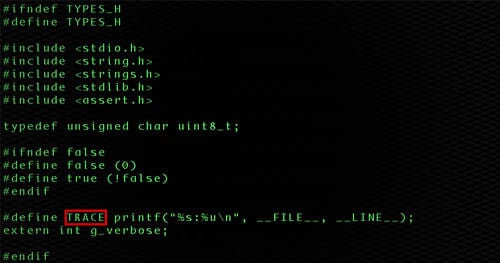
Highlight is a simple utility that creates an image from a text stream, automatically draw boxes around user defined content and automatically blurs sensitive content.
Sometimes we have a text stream, such as the output of a configuration file, and we want to include that as an image into a document. At the same time, we might want to highlight a particular string of text that’s found and we might want to hide other details that might contain things such as passwords. We could use a screen capture utility and then proceed with marking up the image. This leads to inconsistent boxes around text and certainly does not lend itself to automation.
With this utility, the entire process can be automated.
End-to-End WhatsApp: An Opinionated Series on Why Signal Protocol is Well-Designed

WhatsApp recently announced that client communications are now end-to-end encrypted using Open Whisper System’s “Signal Protocol” (previously Axolotl). This has received quite a bit of press lately due to WhatsApp's massive user base, along with the controversial going dark debates. Less importantly, the crypto-nerd in me loves Signal. Because of all of this, I thought I would write a blog series on some of Signal's design decisions that I feel are well-designed.
Secure Password Storage in Go, Python, Ruby, Java, Haskell, and NodeJS
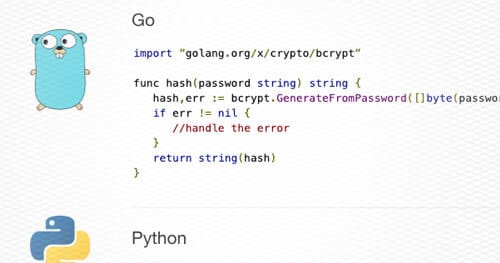
In order to authenticate users, web applications often store user passwords. This can be tricky, because password storage mechanisms are a watering hole for bad advice: there are several solutions to this problem but very few are truly secure. If you store the passwords of your users, your goal should be to make sure that in the event of a data compromise, user passwords should remain safe. The best way to store users passwords is to use a password-based key derivation function (PBKDF) with a sufficient work factor. If your application does not leverage a PBKDF, you should migrate password storage schemes immedietely. More on this later.
Machine Learning Tutorial

We see huge benefits of machine learning in the field of computer security. Much of the work we do on a daily basis can be automated and classified by a machine, leaving us to focus on more interesting and challenging problems. One stunning example is the automated binary exploitation and patching research funded by DARPA for the Cyber Grand Challenge. Problems like these are the stepping stones that will lead us to a future of automated computer security. To encourage future candidates (and ourselves) to delve into the world of machine learning, we built a new technical challenge to test the waters. The challenge is based on a CTF problem from SECCON, discovered by @ctfhacker, and features a mysterious compiler that always produces unique binaries.