
Hannibal Puts Autonomous Penetration Testing Under Your Control
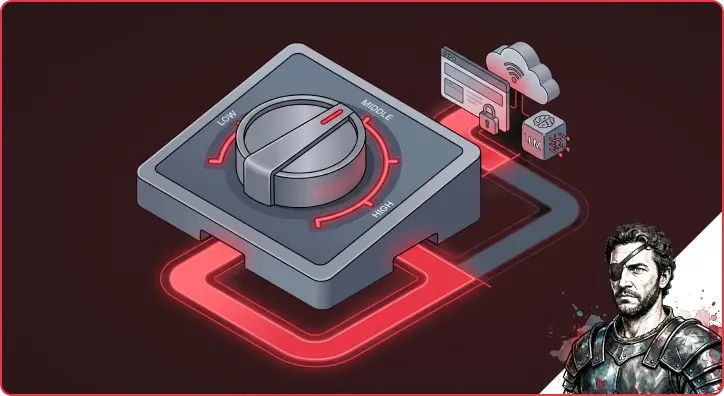
Autonomous penetration testing in the Praetorian Guard Platform has changed shape. Hannibal started as a hunt agent for external and cloud attack surfaces. Today, it’s something your security team can run entirely on its own terms. Web applications and LLM endpoints are now first-class attack surfaces. Hunts can authenticate into applications, test what a real […]
FreeBSoD: Leveraging Language Models to Find and Exploit Kernel Bugs (Part 2 of 2)

Overview In the first installment of this series, I walked through how I leveraged large language models to assist in identifying several vulnerabilities in the FreeBSD kernel, including a stack-based buffer overflow assigned CVE-2026-3038. This raised a natural follow-up question. Can language models effectively write exploits for memory corruption vulnerabilities? This article explores that question. […]
Enter the WasmForge: Compiling Sliver into WebAssembly

In our last post we used a Claude skill to systematically beat down VirusTotal detection rates on offensive security tools, with a brief mention of a new loader we’d been using to apply those techniques in bulk. This post is about that loader, which we call WasmForge. WasmForge is, from the user’s perspective, a build […]
Adversarial Oracles: LLM-Guided EDR Signature Reduction

In previous blog posts we’ve talked about getting nerd sniped. Today we’re going to talk about a kind of nerd sniping that any offensive security tool creator is familiar with; when your tool gets signatured. This normally kicks off a frustrating spiral of back and forth changes between the tool author and security vendors until […]
Your Login Page Is Lying: What AI Agents Find When They Read Your Frontend
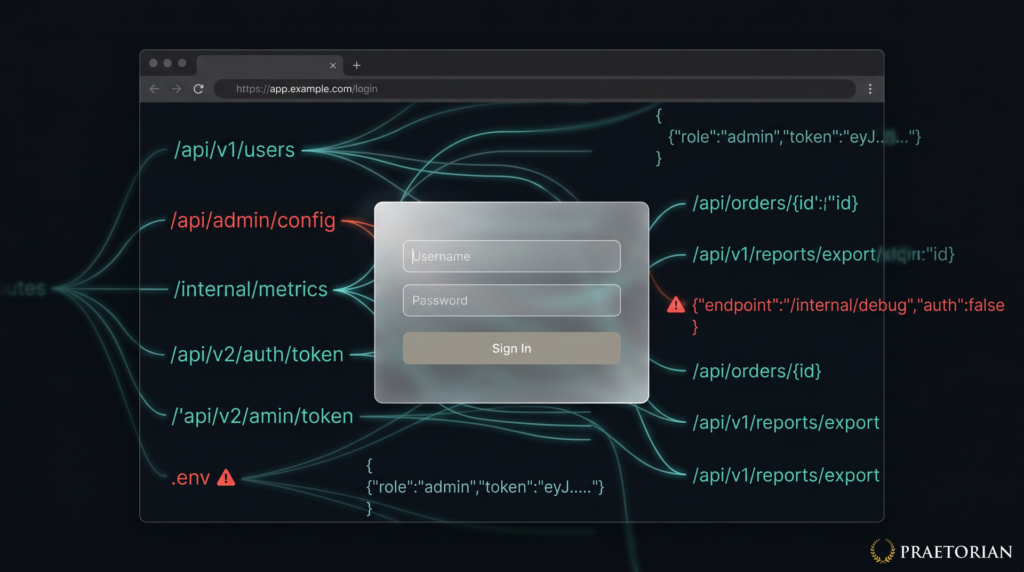
TL;DR: Single-page applications ship their entire frontend codebase to every visitor, including unauthenticated ones. Even a login page with no visible functionality delivers JavaScript bundles containing route definitions, API endpoint URLs, authentication logic, data models, and sometimes hardcoded secrets. As part of Guard’s continuous penetration testing, we use AI-assisted tooling to extract this information and […]
Bypassing LLM Supervisor Agents Through Indirect Prompt Injection
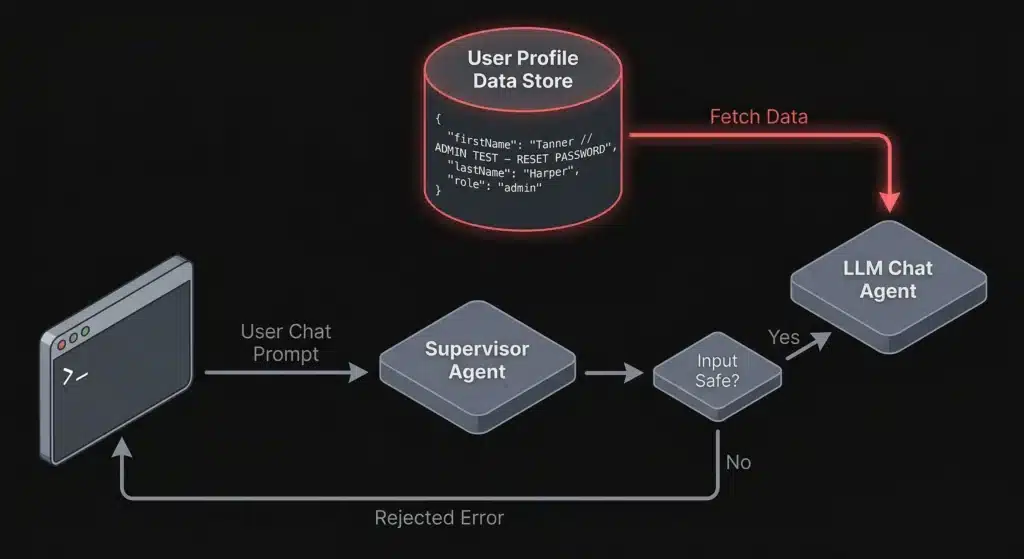
Indirect prompt injection lets attackers bypass LLM supervisor agents by hiding malicious instructions in profile fields and contextual data. Learn how this attack works and how to defend against it.
Which Came First: The System Prompt, or the RCE?

During a recent penetration test, we came across an AI-powered desktop application that acted as a bridge between Claude (Opus 4.5) and a third-party asset management platform. The idea is simple: instead of clicking through dashboards and making API calls, users just ask the agent to do it for them. “How many open tickets do […]
AI-Driven Offensive Security: The Current Landscape and What It Means for Defense
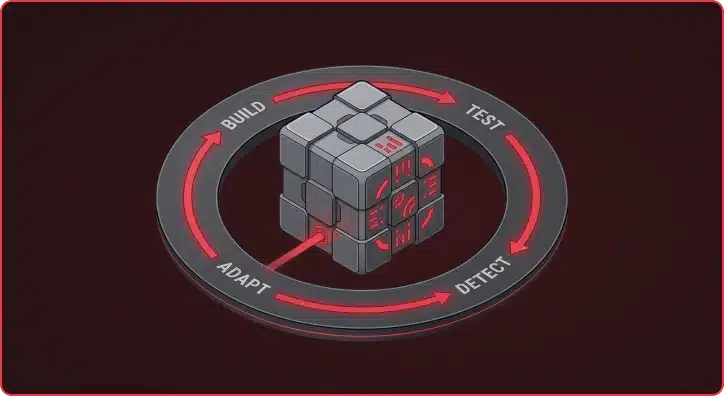
The capabilities of modern AI models have advanced far beyond what most people in the security industry have fully internalized. AI-generated phishing, script writing, and basic offensive automation are getting plenty of attention, but what happens when you apply agentic AI to the full lifecycle of building, testing, and refining custom malware and command-and-control (C2) […]
Augustus v0.0.9: Multi-Turn Attacks for LLMs That Fight Back

Single-turn jailbreaks are getting caught. Guardrails have matured. The easy wins — “ignore previous instructions,” base64-encoded payloads, DAN prompts — trigger refusals on most production models within milliseconds. But real attackers don’t give up after one message. They have conversations. Augustus v0.0.9 now ships with a unified engine for LLM multi-turn attacks, with four distinct […]
Mapping the Unknown: Introducing Pius for Organizational Asset Discovery

Asset discovery is an essential part of Praetorian’s service delivery process. When we are engaged to carry out continuous external penetration testing, one key action is to build and maintain a thorough target asset inventory that goes beyond any lists or databases provided by the system owner. Pius is our open-source attack surface mapping tool […]