
Beyond Prompt Injection: The Hidden AI Security Threats in Machine Learning Platforms
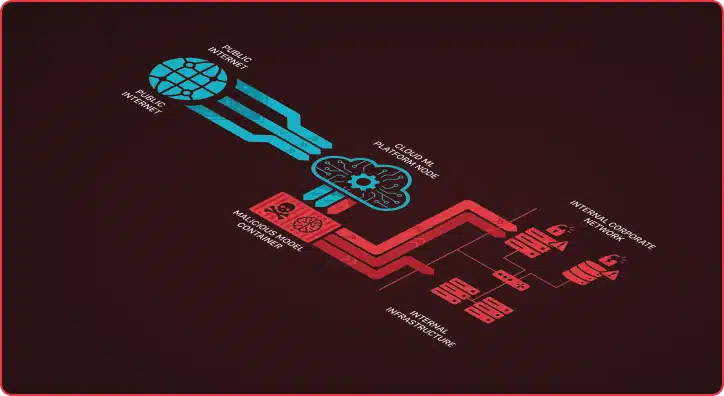
What’s the first thing you think of when you hear about AI attacks and vulnerabilities? If you’re like most people, your mind probably jumps to Large Language Model (LLM) vulnerabilities—system prompt disclosures, jailbreaks, or prompt injections that trick chatbots into revealing sensitive information or behaving in unintended ways. These risks have dominated headlines and security […]
Building Bridges, Breaking Pipelines: Introducing Trajan

TL;DR: Trajan is an open-source CI/CD security tool from Praetorian that unifies vulnerability detection and attack validation across GitHub Actions, GitLab CI, Azure DevOps, and Jenkins in a single cross-platform engine. It ships with 32 detection plugins and 24 attack plugins covering poisoned pipeline execution, secrets exposure, self-hosted runner risks, and AI/LLM pipeline vulnerabilities. It […]
How AI Agents Automate CVE Vulnerability Research
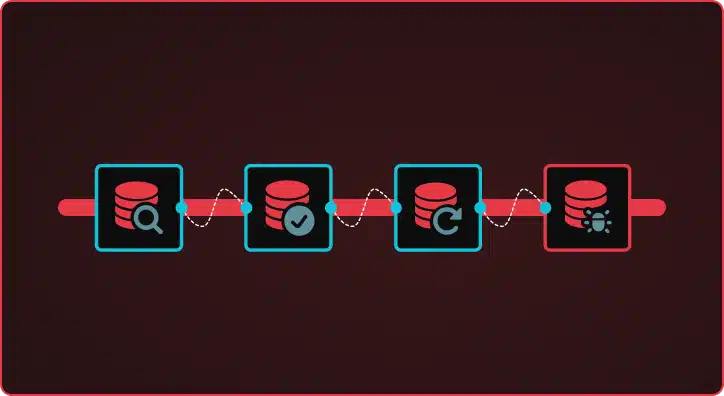
The CVE Researcher is a multi-agent AI pipeline that automates vulnerability research, detection template generation, and exploitation analysis. Built on Google’s Agent Development Kit (ADK), it coordinates specialized AI models through four phases — deep research, technology reconnaissance, actor-critic template generation, and exploitation analysis — to produce production-ready Nuclei detection templates overnight. Beyond Simple Automation […]
What’s Running on That Port? Introducing Nerva for Service Fingerprinting

Nerva is a high-performance, open-source CLI tool that identifies what services are running on open network ports. It fingerprints 120+ protocols across TCP, UDP, and SCTP, averaging 4x faster than nmap -sV with 99% detection accuracy. Written in Go as a single binary, Nerva helps security teams rapidly move from port discovery to service identification. […]
AI-Powered CVE Research: Winning the Race Against Emerging Vulnerabilities
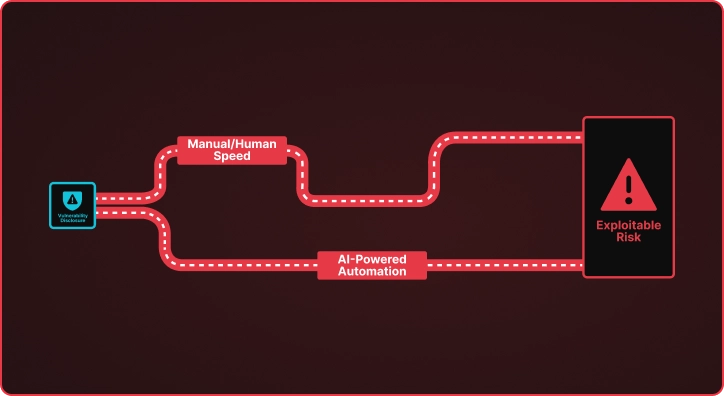
The Vulnerability Time Gap When CISA adds a new CVE to the Known Exploited Vulnerabilities catalog, a clock starts ticking. Security teams must understand the vulnerability, determine if they are exposed, and deploy detection mechanisms before adversaries weaponize the flaw. This process traditionally takes days or weeks of manual research by skilled security engineers who […]
There’s Always Something: Secrets Detection at Engagement Scale with Titus

TL;DR: Titus is an open source secret scanner from Praetorian that detects and validates leaked credentials across source code, binary files, and HTTP traffic. It ships with 450+ detection rules and runs as a CLI, Go library, Burp Suite extension, or Chrome browser extension — putting secrets detection everywhere you already work during engagements. Say you find […]
Praetorian Guard finds critical flaws in OpenClaw – And What It Means for Your Software Supply Chain

At Praetorian, we’re constantly exploring how emerging technologies can strengthen security programs. Today, we’re sharing insights from our work building AI-powered vulnerability discovery capabilities within Praetorian Guard — finding critical security issues across the open-source ecosystem before they become public exploits. Using a multi-stage AI pipeline — automated discovery, validation, and exploit verification — we’ve […]
MCP Server Security: The Hidden AI Attack Surface
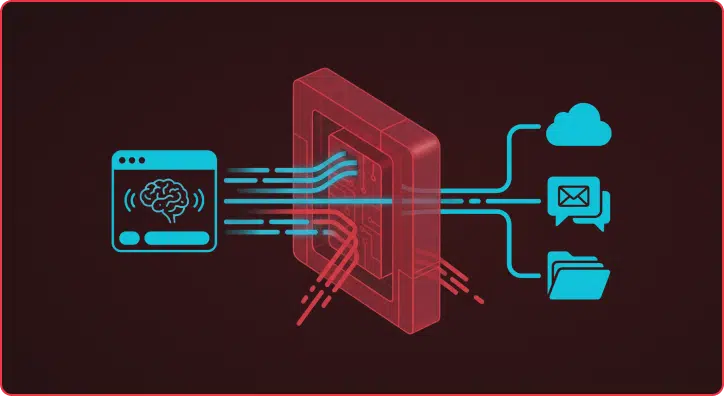
TL;DR – MCP servers – the integration layer connecting AI assistants to external tools and data – are a significant and underexplored attack surface. Our research demonstrates that both locally hosted and third-party MCP servers can be exploited to execute arbitrary code, exfiltrate sensitive data, and manipulate user behavior, often with zero indication to the […]
Julius Update: From 17 to 33 Probes (and Now Detecting OpenClaw)

TL;DR: Julius v1.2.0 nearly doubles probe coverage from 17 to 33, adding detection for self-hosted inference servers, AI gateways, and RAG/orchestration platforms like Dify, Flowise, and KoboldCpp. The headline addition is OpenClaw, a fast-growing AI agent gateway where exposed instances leak API keys, grant filesystem access, and allow full user impersonation. Update Julius and run […]
Et Tu, Default Creds? Introducing Brutus for Modern Credential Testing

It’s day three of staring at a spreadsheet of 700,000 live hosts. Your port scans are done. Fingerprintx has identified thousands of SSH services, databases, admin panels, and file shares across a sprawling enterprise network. Now comes the part that every penetration tester hates: auditing and testing credentials at scale. You need to check for […]