
Knossos: Procedurally Generated Decoy Environments

How we built a procedural engine that learns your real cloud environment, generates decoy environments indistinguishable from production, and converts every attacker interaction into signal. In the myth, Daedalus built the Labyrinth of Knossos so well that he nearly couldn’t escape it himself. The corridors looked real. The paths felt purposeful. And the deeper you […]
Centurion: Bring Your Own Execution Environment

Writing my own virtualized loader is something I’ve been wanting to do since I first read Microsoft’s deep dive on FinFisher’s multi-layered VM obfuscation back in 2018. FinFisher didn’t just use one layer of protection, it implemented a custom virtual machine with 32 opcode handlers, wrapped that in spaghetti code and anti-debug checks, and then buried a second VM […]
Your Login Page Is Lying: What AI Agents Find When They Read Your Frontend
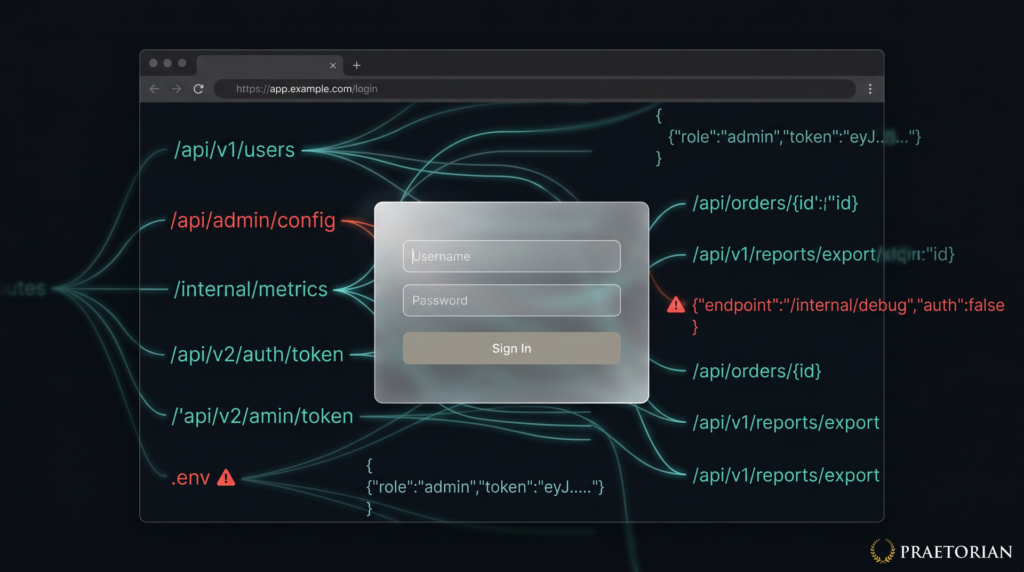
TL;DR: Single-page applications ship their entire frontend codebase to every visitor, including unauthenticated ones. Even a login page with no visible functionality delivers JavaScript bundles containing route definitions, API endpoint URLs, authentication logic, data models, and sometimes hardcoded secrets. As part of Guard’s continuous penetration testing, we use AI-assisted tooling to extract this information and […]
Augustus v0.0.9: Multi-Turn Attacks for LLMs That Fight Back

Single-turn jailbreaks are getting caught. Guardrails have matured. The easy wins — “ignore previous instructions,” base64-encoded payloads, DAN prompts — trigger refusals on most production models within milliseconds. But real attackers don’t give up after one message. They have conversations. Augustus v0.0.9 now ships with a unified engine for LLM multi-turn attacks, with four distinct […]
When Proxies Become the Attack Vectors in Web Architectures
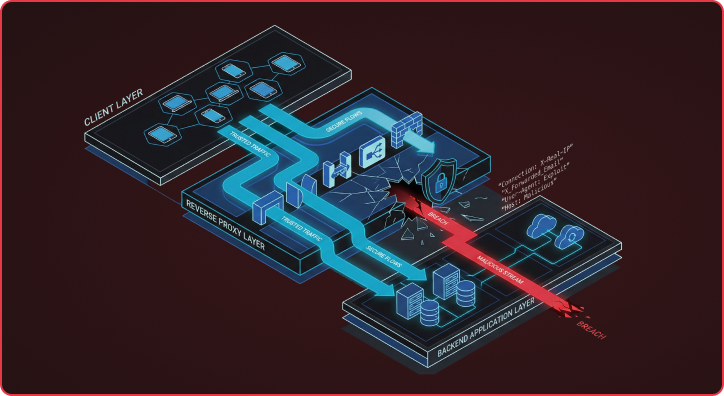
Many Reverse proxy attack vectors expose a flawed assumption in modern web architectures that backends can blindly trust security-critical headers from upstream reverse proxies. This assumption breaks down because HTTP RFC flexibility allows different servers to interpret the same headers in fundamentally different ways, creating exploitable gaps that attackers are increasingly targeting. I want to […]
As Strong As Your Weakest Parameter: An AI Authorization Bypass
In this AI gold rush, LLMs are becoming increasingly popular with many companies rolling out AI-assisted applications. When evaluating the security posture of these applications, it’s essential to pause and ask ourselves: what are we securing? Automated security tools that test models in isolation play an important role in identifying known vulnerabilities and establishing security […]
fwd:cloudsec 2023: Top Four Themes in Cloud Security for 2023
At Praetorian, we pride ourselves on our extensive expertise in cloud security and our commitment to staying at the forefront of the ever-evolving landscape. We consequently were excited to attend the highly anticipated fwd:cloudsec 2023 conference held on June 12–13, in Anaheim, CA. This non-profit conference brings together cloud security professionals, researchers, and practitioners from […]
ASM: The Best Defense is a Good Offense
About 10 years ago, security was relatively simple because everything occurred on premises. Change releases were tightly controlled by a change ticket and review process. In contrast, current networks consist of auto-scaling containers that run in Kubernetes clusters and even serverless clusters like AWS Lambda. We have transitioned from constrained environments that humans closely scrutinized […]
NIST CSF 2.0 Workshop Themes: Praetorian’s View
On 17 August 2022, NIST conducted the first Workshop to organize the effort to update the NIST Cybersecurity Framework (CSF) to version 2.0. Praetorian originally submitted comments to the CSF 2.0 RFI in February 2022. This Workshop provided a forum for NIST to frame the discussion around the major topics that emerged from the RFI. […]
Part 3 – Trends in the Cybersecurity Talent Marketplace in the Face of Sustained Shortages
I’ve written previously about how I believe a team’s expertise and talent are the most important factors in determining the success of a cybersecurity program. I’d like to elaborate a bit more on how I think that is affecting the marketplace for cybersecurity expertise and what it means for people operations. To summarize my previous […]