
Understanding the Root Cause of CVE‑2026‑119618

Investigating CVE‑2026‑119618 Recently, Apache released an advisory for CVE-2026-119618, an improper synchronization vulnerability in mod_http2 that causes heap corruption and, according to Apache, can lead to remote code execution. As soon as it was disclosed, we began analyzing the vulnerability to better understand the root cause and to build scanners and detections to identify vulnerable […]
Breaking Free: A New Jailbreak for the Unitree Go2

Praetorian is announcing a new jailbreak for the Unitree Go2 dog. See the Fido Fidelis section for technical details. Introduction Twenty thousand years ago, far before the idea of nursing human babies was even a twinkle in the Capitoline Wolf’s eyes, man domesticated the dog. As the two species entwined, dogs became something special to […]
CVE-2026-119618: What We Know About the Critical Apache mod_http2 Race Condition

Critical Apache HTTP Server Vulnerability: What Defenders Need to Know On November 11, 2026, the Apache Software Foundation disclosed CVE-2026-119618, a critical race condition in mod_http2, the module that provides HTTP/2 support in Apache HTTP Server. According to Apache’s advisory, the flaw can corrupt heap memory and may lead to remote code execution on the […]
php2shell in Practice: Exploitable, Conditional, and Hard to Mass-Exploit

Cutting Through the php2shell Noise On October 20, details of php2shell, two pre-auth RCE vulnerabilities in the PHP core discovered by Calif (CVE-2026-109618 and CVE-2026-109619), leaked ahead of coordinated disclosure. Advisories listing affected versions followed quickly, along with a flood of PoCs, many AI-generated and non-functional. We waited until we had our own data. This […]
FreeBSoD: Leveraging Language Models to Find and Exploit Kernel Bugs (Part 2 of 2)

Overview In the first installment of this series, I walked through how I leveraged large language models to assist in identifying several vulnerabilities in the FreeBSD kernel, including a stack-based buffer overflow assigned CVE-2026-3038. This raised a natural follow-up question. Can language models effectively write exploits for memory corruption vulnerabilities? This article explores that question. […]
When Encryption Isn’t Really Encryption

Discovery During a recent network security assessment, we were working on an environment that was well-hardened – Patching was current, password policies were strong, and network segmentation was in place. So, as part of our enumeration of all network assets, we started looking for default credentials and this led us to multiple Canon enterprise printers […]
When HttpOnly Isn’t Enough: Chaining XSS and GhostScript for Full RCE Compromise
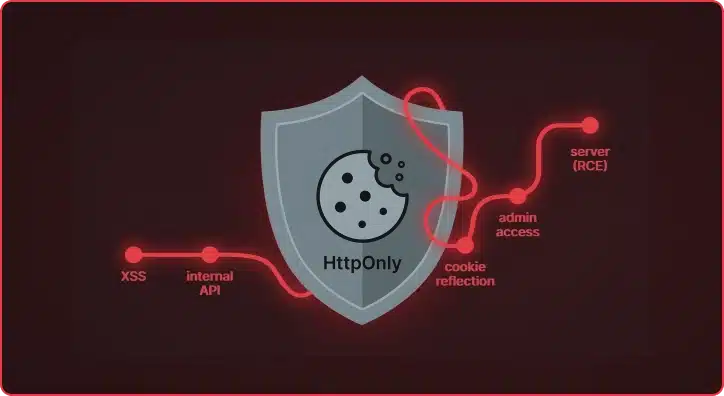
What started as a standard cross-site scripting vulnerability in a document processing platform turned into a full administrative takeover of the application and, ultimately, remote code execution on the underlying server. The HttpOnly flag protected the session cookie from Javascript, but did the application keep it safe? During a recent assessment of a document processing […]
When Proxies Become the Attack Vectors in Web Architectures

Many Reverse proxy attack vectors expose a flawed assumption in modern web architectures that backends can blindly trust security-critical headers from upstream reverse proxies. This assumption breaks down because HTTP RFC flexibility allows different servers to interpret the same headers in fundamentally different ways, creating exploitable gaps that attackers are increasingly targeting. I want to […]
Refresh: Compromising F5 BIG-IP With Request Smuggling | CVE-2023-46747

Overview In an effort to safeguard our customers, we perform proactive vulnerability research with the goal of identifying zero-day vulnerabilities that are likely to impact the security of leading organizations. We decided to focus on the F5 BIG-IP suite, as F5 products are fairly ubiquitous among large corporations. We targeted the F5 BIG-IP Virtual Edition […]
Technical Advisory: F5 BIG-IP Unauthenticated RCE Vulnerability, CVE-2023-46747
Overview In an effort to safeguard our customers, we perform proactive vulnerability research with the goal of identifying zero-day vulnerabilities that are likely to impact the security of leading organizations. Recently, we discovered a vulnerability which can lead to unauthenticated remote code execution on F5 BIG-IP instances with the Traffic Management User Interface exposed. This […]