
Red Team Infrastructure Tooling: Command Line Utilities and U2F

This article shares observations and best practices for red team infrastructure tooling, with a focus on command-line applications to manage server infrastructure.
Praetorian’s Approach to Red Team Infrastructure

Praetorian provides a best practices approach to Red Team Infrastructure using a Google BeyondCorp architecture
Obtaining LAPS Passwords Through LDAP Relaying Attacks

Commentary on Praetorian’s recent contribution of additional functionality to the Impacket ntlmrelayx utility.
Getting Started with Praetorian’s ATT&CK Automation
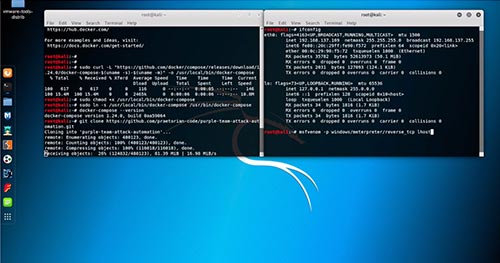
Earlier this month, Praetorian released its automation for emulating adversary tactics, techniques, and procedures (TTPs) based on the MITRE ATT&CK framework. We’ve gotten a number of requests from users asking for more detailed instructions on how to get started with the tool. This blog post accompanies the recently released video tutorial.
Process Injection and Process Hollowing (ATT&CK T1055 & T1093)
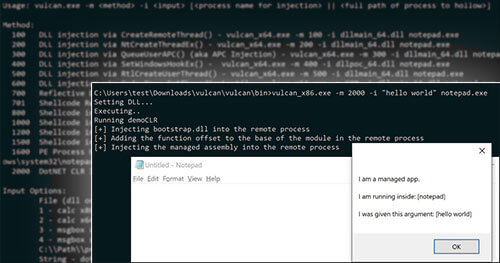
We are releasing Vulcan, a tool to make it easy and fast to test various forms of injection. All of the techniques included are already public. Vulcan brings them together in a single tool to test endpoint detection and response (EDR) coverage so that you can quickly identify detection gaps. This tool can be used as a test-harness to identify gaps so that efforts can be focused on detecting holes.
Red Team Supply Chain Attacks in Modern Software Development Environments
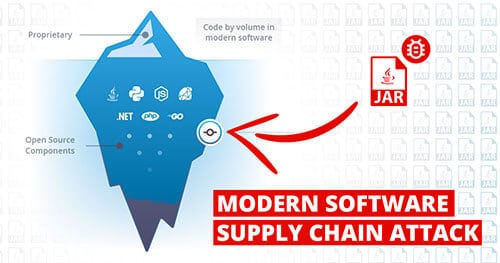
The future of red teaming not only requires updated adversarial tradecraft – although that’s a big part of it – but also a shift in buyer mindset to scope realistic scenarios that continue to test and challenge their defences.
ICMP C2 Standard Non-Application Layer Protocol (ATT&CK T1095)
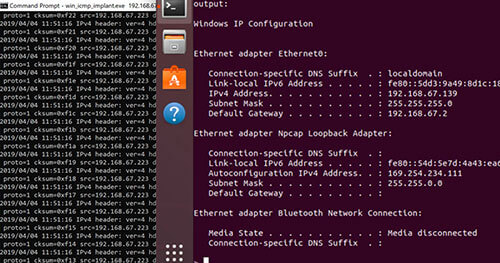
While ICMP may not be the answer for exfiltration, it can be very useful as a long-term C2 alternative channel. If all other communications channels didn’t work or failed or if persistence / access was terminated, we could always maintain a stealthy ICMP backup channel, which we could use to respawn primary C2 channel.
Using Slack Web Services as a C2 Channel (ATT&CK T1102)
Our proof of concept (PoC) blends in with normal business activities such as user-to-user or user-to-group communications. Detecting this type of activity requires sophisticated network analysis capabilities, such as the ability to intercept and decrypt SSL messages. Future versions may add additional encryption on top of SSL. In our PoC, we also configure a random sleep between 1m and 5m to further obfuscate our activity. These sleep times can help our C2 fly under the radar, but will also impact the ability of the attack operator to execute rapidly depending on how aggressively the timeouts are configured.
Signed Binaries Proxy Execution – T1218
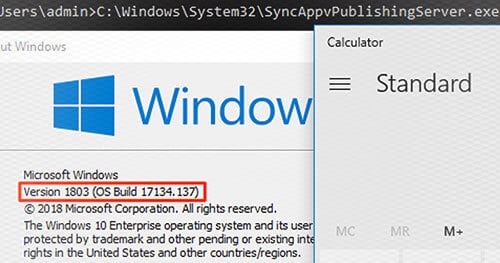
The MITRE ATTACK April release included is a new TTP known as ‘Signed Binaries Proxy Execution’ which is T1218. This TTP is based on an attacker using signed binaries to perform malicious activities.
Signed Scripts Proxy Execution – T1216
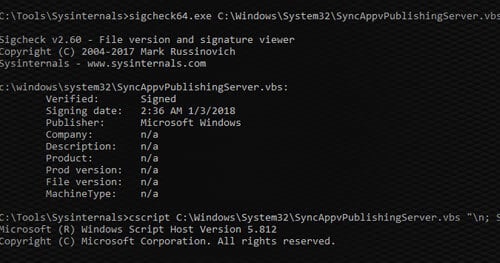
Many organizations trust all signed code from Microsoft. Unfortunately, there are many ways in which attackers can use this trust against them. Previously, we covered using signed binaries to perform malicious activities. In this post, we will be covering how to use signed scripts.