
Bluetooth Low Energy Security Testing, Consolidated: Introducing Caeruleus

The Bluetooth Low Energy (BLE) tooling space is fragmented and decaying. Picture a typical BLE testing session: you spin up bettercap to run ble.recon and ble.enum, your trusty (but deprecated) gatttool to read and write handles, and, when it’s time to fuzz that one writable characteristic, dig up that custom Bleak script you copy-paste between […]
Enter the WasmForge: Compiling Sliver into WebAssembly

In our last post we used a Claude skill to systematically beat down VirusTotal detection rates on offensive security tools, with a brief mention of a new loader we’d been using to apply those techniques in bulk. This post is about that loader, which we call WasmForge. WasmForge is, from the user’s perspective, a build […]
Adversarial Oracles: LLM-Guided EDR Signature Reduction

In previous blog posts we’ve talked about getting nerd sniped. Today we’re going to talk about a kind of nerd sniping that any offensive security tool creator is familiar with; when your tool gets signatured. This normally kicks off a frustrating spiral of back and forth changes between the tool author and security vendors until […]
Julius v0.2.0: From 33 to 63 Probes — Now Detecting Cloud AI, Enterprise Inference, and RAG Pipelines

TL;DR: Julius v0.2.0 nearly doubles LLM fingerprinting probe coverage from 33 to 63, adding detection for cloud-managed AI services (AWS Bedrock, Azure OpenAI, Vertex AI), high-performance inference servers (SGLang, TensorRT-LLM, Triton), AI gateways (Portkey, Helicone, Bifrost), and self-hosted RAG platforms (PrivateGPT, RAGFlow, Quivr). This release also hardens the scanner itself with response size limiting and […]
Azure APIM Signup Bypass: 97.9% of Developer Portals Still Exploitable Anonymously and from the Internet
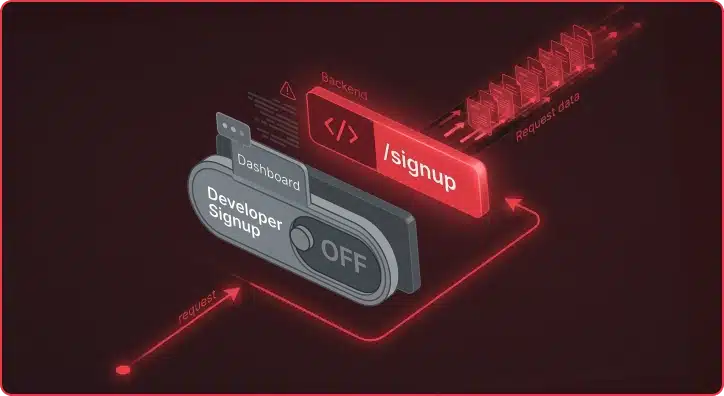
The Azure APIM signup bypass is a critical vulnerability affecting 97.9% of internet-facing Developer Portals. Azure API Management (APIM) exposes APIs to external consumers through a Developer Portal, the interface where developers self-register, obtain API keys, and make API calls. The default APIM configuration ships with Basic Authentication enabled as the identity provider and the […]
Augustus v0.0.9: Multi-Turn Attacks for LLMs That Fight Back

Single-turn jailbreaks are getting caught. Guardrails have matured. The easy wins — “ignore previous instructions,” base64-encoded payloads, DAN prompts — trigger refusals on most production models within milliseconds. But real attackers don’t give up after one message. They have conversations. Augustus v0.0.9 now ships with a unified engine for LLM multi-turn attacks, with four distinct […]
Et Tu, RDP? Detecting Sticky Keys Backdoors with Brutus and WebAssembly
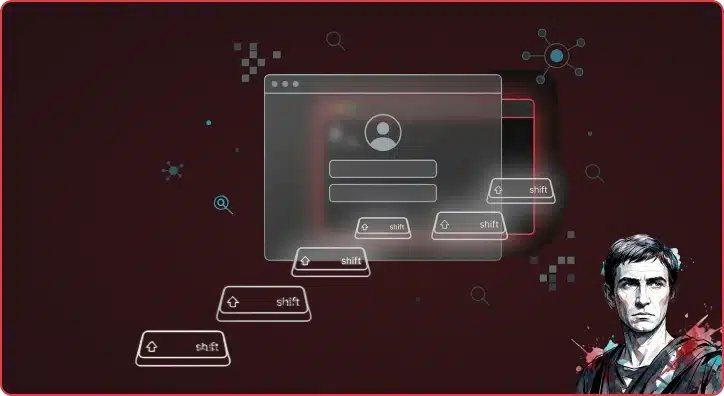
Everyone knows that one person on the team who’s inexplicably lucky, the one who stumbles upon a random vulnerability seemingly by chance. A few days ago, my coworker Michael Weber was telling me about a friend like this who, on a recent penetration test, pressed the shift key five times at an RDP login screen […]
Mapping the Unknown: Introducing Pius for Organizational Asset Discovery

Asset discovery is an essential part of Praetorian’s service delivery process. When we are engaged to carry out continuous external penetration testing, one key action is to build and maintain a thorough target asset inventory that goes beyond any lists or databases provided by the system owner. Pius is our open-source attack surface mapping tool […]
There’s Always Something: Secrets Detection at Engagement Scale with Titus

TL;DR: Titus is an open source secret scanner from Praetorian that detects and validates leaked credentials across source code, binary files, and HTTP traffic. It ships with 450+ detection rules and runs as a CLI, Go library, Burp Suite extension, or Chrome browser extension — putting secrets detection everywhere you already work during engagements. Say you find […]
Introducing Augustus: Open Source LLM Prompt Injection Tool

From LLM Fingerprinting to LLM Prompt Injection Last month we released Julius, a tool that answers the question: “what LLM service is running on this endpoint?” Julius identifies the infrastructure. But identification is only the first step. The natural follow-up: “now that I know what’s running, how do I test whether it’s secure?” That’s what […]