
Corrupting the Hive Mind: Persistence Through Forgotten Windows Internals

Eventually after you write a tool, the time comes to make it public. That time has come for Swarmer, a tool for stealthy modification of the Windows Registry as a low privilege user. It’s been almost a year since we first deployed this technique in the wild, and given enough time has passed, it seems appropriate […]
CVE-2025-52493: When Password FieldsAren’t Enough – Client-Side SecretExposure in PagerDuty Cloud Runbook
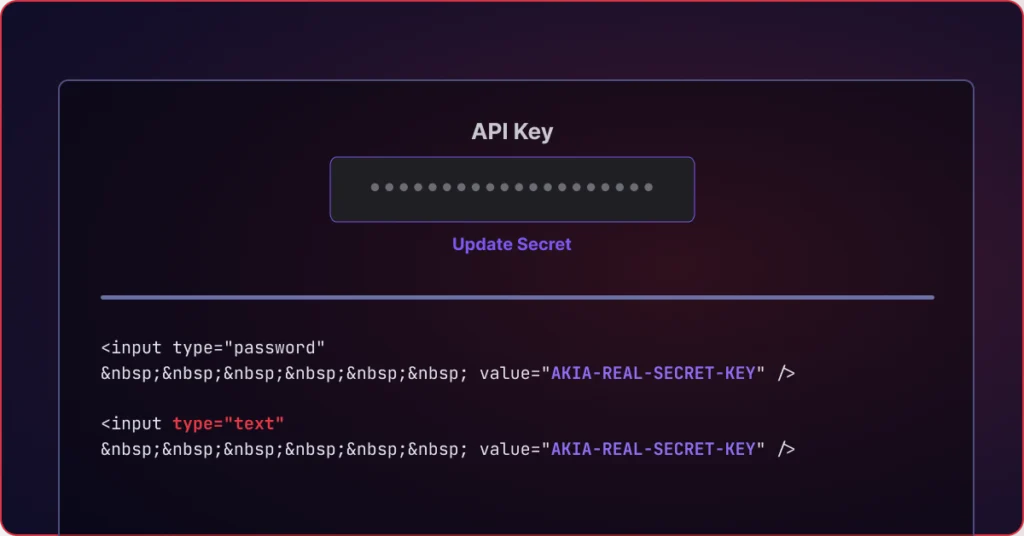
By Mario Bartolome & Carter Ross During a recent Red Team engagement, our team at Praetorian discovered a vulnerability in PagerDuty Cloud Runbook that highlights a fundamental security principle: never trust the client with secrets. In this blog, we share details about CVE-2025-52493, a medium-severity vulnerability that exposed stored secrets to authenticated administrators through simple […]
How I Found the Worst ASP.NET Vulnerability — A $10K Bug (CVE-2025-55315)
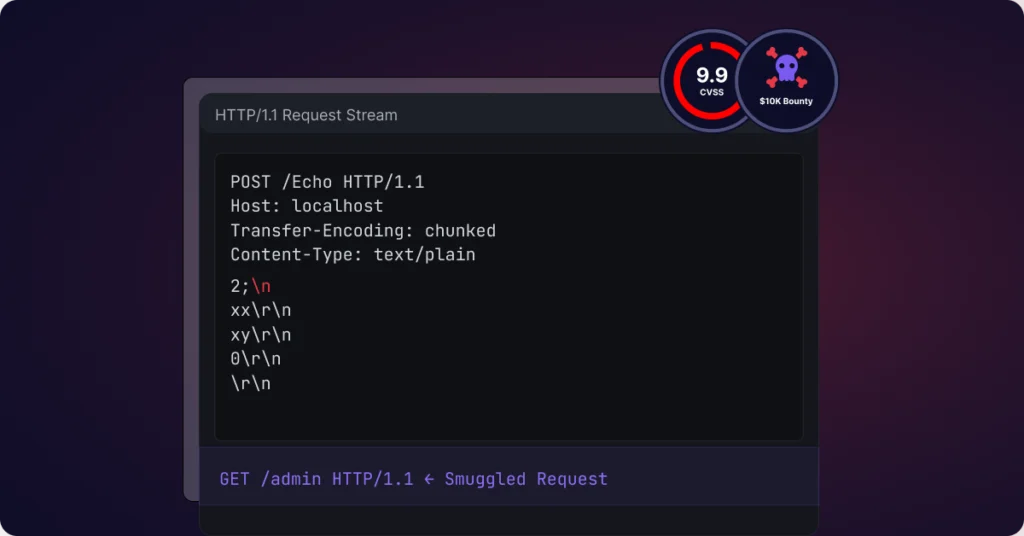
Introduction Earlier this year, I earned a $10,000 bounty from Microsoft after discovering a critical HTTP request smuggling vulnerability in ASP.NET Core’s Kestrel server (CVE-2025-55315). The vulnerability garnered significant media attention after Microsoft assigned it a CVSS score of 9.9, the highest severity rating ever assigned to an ASP.NET Core vulnerability. This post walks through […]
Your Vulnerability Scanner Might Be Your Weakest Link

Overview Vulnerability scanners are a cornerstone of modern security programs, helping teams identify weaknesses before attackers do. But when these tools are configured with privileged credentials, they can themselves become high-value targets. In one case, while running continuous testing through our Chariot platform for a Fortune 500 financial services company, we compromised a server and […]
Domain Fronting is Dead. Long Live Domain Fronting!

Overview At Black Hat and DEF CON, we demonstrated how red teams could tunnel traffic through everyday collaboration platforms like Zoom and Microsoft Teams, effectively transforming them into covert communication channels for command-and-control. That research highlighted a critical blind spot: defenders rarely block traffic to core business services because doing so would disrupt legitimate operations. […]
OAuthSeeker: Leveraging OAuth Phishing for Initial Access and Lateral Movement on Red Team Engagements
Overview The Praetorian Labs team recently conducted research into potential initial access vectors for red team engagements, focusing on attack techniques leveraging malicious applications distributed through platforms like the Microsoft Store. This included OAuth applications, malicious Outlook extensions, and other types of applications that could be delivered via the Windows Store. As part of this […]
Ghost Calls: Abusing Web Conferencing for Covert Command & Control (Part 2 of 2)

In part one, we discussed the architecture of web conferencing applications, with a specific focus on Zoom’s architecture to support web conferencing at a massive global scale. Part two will discuss the approach we developed to support tunneling traffic through Zoom and Microsoft Teams using the TURN protocol. Let’s start with a quick recap of […]
Ghost Calls: Abusing Web Conferencing for Covert Command & Control (Part 1 of 2)
Web conferencing covert C2 turns the most trusted traffic on an enterprise network, the daily Zoom and Teams calls defenders are told to exempt from inspection, into an interactive command-and-control channel. In the middle of a particularly tight red team engagement, we hit a familiar wall. Our long-term implant was rock solid: quiet, persistent, and […]
ELFDICOM: PoC Malware Polyglot Exploiting Linux-Based Medical Devices

A high severity vulnerability in DICOM, the healthcare industry’s standard file protocol for medical imaging, has remained exploitable years after its initial disclosure. The flaw enables attackers to embed malicious code within legitimate medical image files. While previous research demonstrated this vulnerability’s impact on Windows-based medical systems, Praetorian’s new proof of concept, ELFDICOM, extends the […]
An Improved Detection Signature for the Kubernetes IngressNightmare Vulnerability

Wiz recently published a detailed analysis of a critical vulnerability in the NGINX Ingress admission controller—what they’ve dubbed IngressNightmare (CVE-2025-1097, CVE-2025-1098, CVE-2025-1974, CVE-2025-24514). The vulnerability stems from insufficient input validation during configuration file processing, allowing an attacker to inject arbitrary code into the NGINX process. Wiz’s writeup is excellent and covers the technical nuances thoroughly, […]