
Meet Vespasian. It Sees What Static Analysis Can’t.

Praetorian is excited to announce the release of Vespasian, a probabilistic API endpoint discovery, enumeration, and analysis tool. Vespasian watches real HTTP traffic from a headless browser or your existing proxy captures and turns it into API specifications (OpenAPI, GraphQL SDL, WSDL). We built it because pentesters spend the first days of every API engagement […]
Your API Has Authorization Bugs. Hadrian Finds Them.

Authorization vulnerabilities are the most common critical finding in our API penetration tests. We find them on nearly every engagement: a user changes an ID in the URL and gets back another user’s data. Broken Object Level Authorization (BOLA) has been the #1 risk on the OWASP API Security Top 10 since the list was […]
Julius v0.2.0: From 33 to 63 Probes — Now Detecting Cloud AI, Enterprise Inference, and RAG Pipelines

TL;DR: Julius v0.2.0 nearly doubles LLM fingerprinting probe coverage from 33 to 63, adding detection for cloud-managed AI services (AWS Bedrock, Azure OpenAI, Vertex AI), high-performance inference servers (SGLang, TensorRT-LLM, Triton), AI gateways (Portkey, Helicone, Bifrost), and self-hosted RAG platforms (PrivateGPT, RAGFlow, Quivr). This release also hardens the scanner itself with response size limiting and […]
Reunifying the Cloud: Introducing Aurelian for Multi-Cloud Security Testing

You are one week into a cloud penetration test. The client handed you an AWS access key, pointed you at three Azure subscriptions, and mentioned a GCP project that “someone on the platform team set up last year.” Your objective: find everything that is exposed, misconfigured, or one IAM policy away from a full compromise. […]
Augustus v0.0.9: Multi-Turn Attacks for LLMs That Fight Back

Single-turn jailbreaks are getting caught. Guardrails have matured. The easy wins — “ignore previous instructions,” base64-encoded payloads, DAN prompts — trigger refusals on most production models within milliseconds. But real attackers don’t give up after one message. They have conversations. Augustus v0.0.9 now ships with a unified engine for LLM multi-turn attacks, with four distinct […]
Et Tu, RDP? Detecting Sticky Keys Backdoors with Brutus and WebAssembly
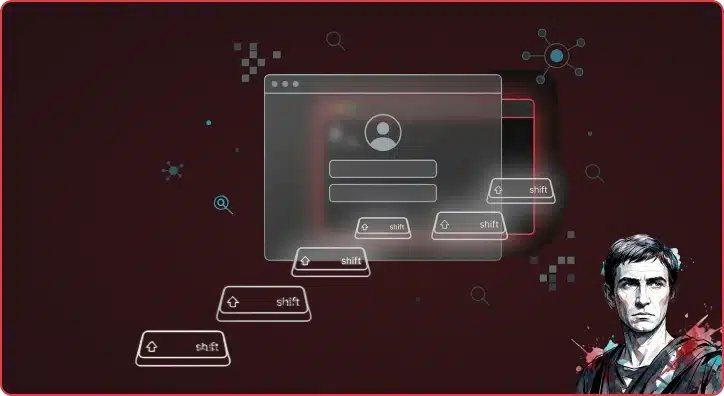
Everyone knows that one person on the team who’s inexplicably lucky, the one who stumbles upon a random vulnerability seemingly by chance. A few days ago, my coworker Michael Weber was telling me about a friend like this who, on a recent penetration test, pressed the shift key five times at an RDP login screen […]
Mapping the Unknown: Introducing Pius for Organizational Asset Discovery

Asset discovery is an essential part of Praetorian’s service delivery process. When we are engaged to carry out continuous external penetration testing, one key action is to build and maintain a thorough target asset inventory that goes beyond any lists or databases provided by the system owner. Pius is our open-source attack surface mapping tool […]
Building Bridges, Breaking Pipelines: Introducing Trajan

TL;DR: Trajan is an open-source CI/CD security tool from Praetorian that unifies vulnerability detection and attack validation across GitHub Actions, GitLab CI, Azure DevOps, and Jenkins in a single cross-platform engine. It ships with 32 detection plugins and 24 attack plugins covering poisoned pipeline execution, secrets exposure, self-hosted runner risks, and AI/LLM pipeline vulnerabilities. It […]
What’s Running on That Port? Introducing Nerva for Service Fingerprinting

Nerva is a high-performance, open-source CLI tool that identifies what services are running on open network ports. It fingerprints 120+ protocols across TCP, UDP, and SCTP, averaging 4x faster than nmap -sV with 99% detection accuracy. Written in Go as a single binary, Nerva helps security teams rapidly move from port discovery to service identification. […]
There’s Always Something: Secrets Detection at Engagement Scale with Titus

TL;DR: Titus is an open source secret scanner from Praetorian that detects and validates leaked credentials across source code, binary files, and HTTP traffic. It ships with 450+ detection rules and runs as a CLI, Go library, Burp Suite extension, or Chrome browser extension — putting secrets detection everywhere you already work during engagements. Say you find […]