
Ruby Unsafe Reflection Vulnerabilities
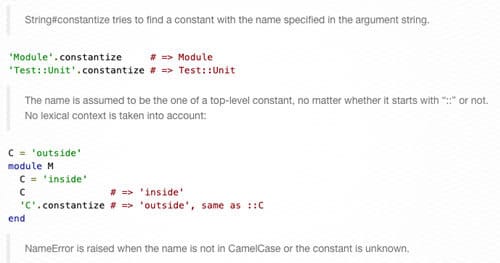
One of the interesting properties of Ruby is the fact that everything is an object. The manipulation of objects at runtime is what makes Ruby so flexible and interesting as a language. At its heart, this is the idea behind reflection. Reflection is a tool to allow a program to examine and modify its own behavior at runtime, granting programmers the ability to simpilify certain constructs (e.g. framework development, dependency resolution).
Introducing MitM-VM & Trudy: A Dead Simple TCP Intercepting Proxy Tool Set
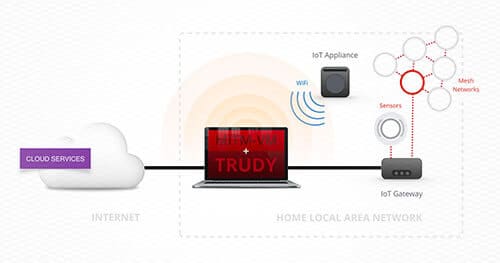
Positioning yourself as a man-in-the-middle (MitM) is a powerful situation to leverage during a security assessment. Unfortunately, in some situations, leveraging an active MitM position is difficult. There are existing proxies that try to alleviate these issues but they all seem to suffer from a flaw that makes using the tool undesirable. MitM-VM and Trudy are a complimentary set of tools that are designed to address several issues with existing proxies. Together they enable easy-to-setup and powerful man-in-the-middle positions. Why build these tools? Modifying custom binary protocols on the fly while sitting between an embedded device and a server is usually a slow process that involves sniffing legitimate traffic and then rebuilding packets programmatically. Trudy makes this process easy by enabling Burp-like features for generalized TCP traffic.
Javascript Sensor API and New Browser Features Raise Privacy Concerns

The W3 specs get updated and expand faster than most people can keep up with them. In 2015, many browsers began adding support for mobile sensors which do not prompt users for permission to access them. The new Javascript sensor API and browser features should start raising privacy concerns. These new features allow web applications to be more powerful and ultimately replace the role of many mobile apps. As both a developer and user, it’s important to stay aware of new features and to be mindful of what a website is capable of doing to your mobile device.
Why You Should Add Joern to Your Source Code Audit Toolkit
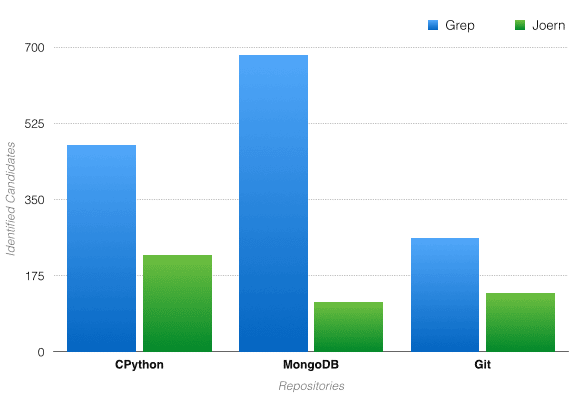
Joern is a static analysis tool for C / C++ code. It builds a graph that models syntax. The graphs are built out using Joern’s fuzzy parser. The fuzzy parser allows for Joern to parse code that is not necessarily in a working state (i.e., does not have to compile). Joern builds this graph with multiple useful properties that allow users to define meaningful traversals. These traversals can be used to identify potentially vulnerable code with a low false-positive rate.
Using Developer Debugging Tools to Pentest Mobile Applications
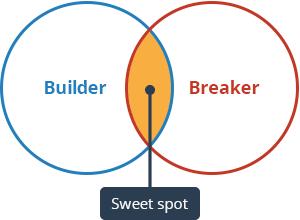
During a recent assessment, I was pentesting a hybrid mobile application that is a companion to a web application. The applications allow users to collaborate while creating new interactive digital content. Through the web interface, content creators are allowed to upload a wide range of files, including HTML files, and share the content with other individuals in their organization. Thus, any user with proper permissions is able to view and edit shared content.
Man-in-the-Middle TLS Protocol Downgrade Attack

A flaw was recently found in OpenSSL that allowed for an attacker to negotiate a lower version of TLS between the client and server (CVE-2014-3511). While this vulnerability was quickly patched, an attacker that has control of your traffic can still simulate this attack today. Let’s explore how this is possible through looking at man-in-the-middle attacks and how browsers handle SSL/TLS connections. In addition, we will see the implications of the attack on cryptographic security.
MAC Cryptographic Errors and Vulnerabilities in SSO Authentication
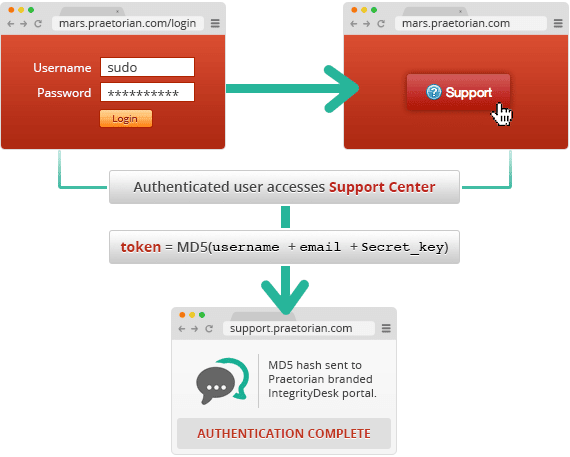
In-house crypto is often a goldmine of cryptographic errors and vulnerabilities. In this post, I’ll describe one of the glaring errors discovered in an online customer support and help desk solution we were considering for use in Praetorian’s cloud-based password cracking service, Project Mars. Hopefully, this can serve as a warning to anyone thinking about writing his or her own crypto libraries.
Exploiting Mobile Banking with HeartBleed Vulnerability

For anyone who has not heard, a critical SSL vulnerability called HeartBleed was made public earlier this week that affects a widely used version of OpenSSL. In this post, I will demonstrate the HeartBleed vulnerability being exploited on a vulnerable mobile banking application and backend server within our test environments.
CRITICAL: HeartBleed Vulnerability

There is a new critical vulnerability affecting a widely used version of OpenSSL called HeartBleed (CVE-2014-0160). This new bug allows an attacker to read system memory remotely, without authentication. It has been reported that 60-70% of the Internet is affected. Immediate action should be taken to identify vulnerable systems within your environment and take necessary steps to mitigate risk associated with this critical vulnerability.
Whats up with WhatsApp’s Security?

Facebook’s acquisition announcement coincided with the starting week of Project Neptune’s beta program. Project Neptune is Praetorian’s new mobile application security testing platform that allows companies to keep pace with rapid mobile development cycles by incorporating continuous, on-demand security testing. And what’s a better way to properly kick off our beta program than to test a publicly available mobile app worth $19 billion? Within minutes, Project Neptune picked up on several SSL-related security issues affecting the confidentiality of WhatsApp user data that passes in transit to back-end servers. This is the kind of stuff the NSA would love. It basically allows them—or an attacker—to man-in-the-middle the connection and then downgrade the encryption so they can break it and sniff the traffic. These security issues put WhatsApp user information and communications at risk.