
Uncover Material Risk Before Adversaries Exploit It
Praetorian’s elite offensive security engineers go beyond automated scanning to identify, validate, and prioritize the vulnerabilities that matter most, across every layer of your attack surface.
Zero False Positives
Every finding verified by an expert
70% Faster MTTR
Critical vulns validated or closed in record time
100% Compliance Coverage
FDA, GLBA, HIPAA, NERC, PCI-DSS & more
Penetration Testing Across Your Entire Attack Surface
Expert-led offensive security for every domain, from applications and cloud to AI, IoT, and beyond.
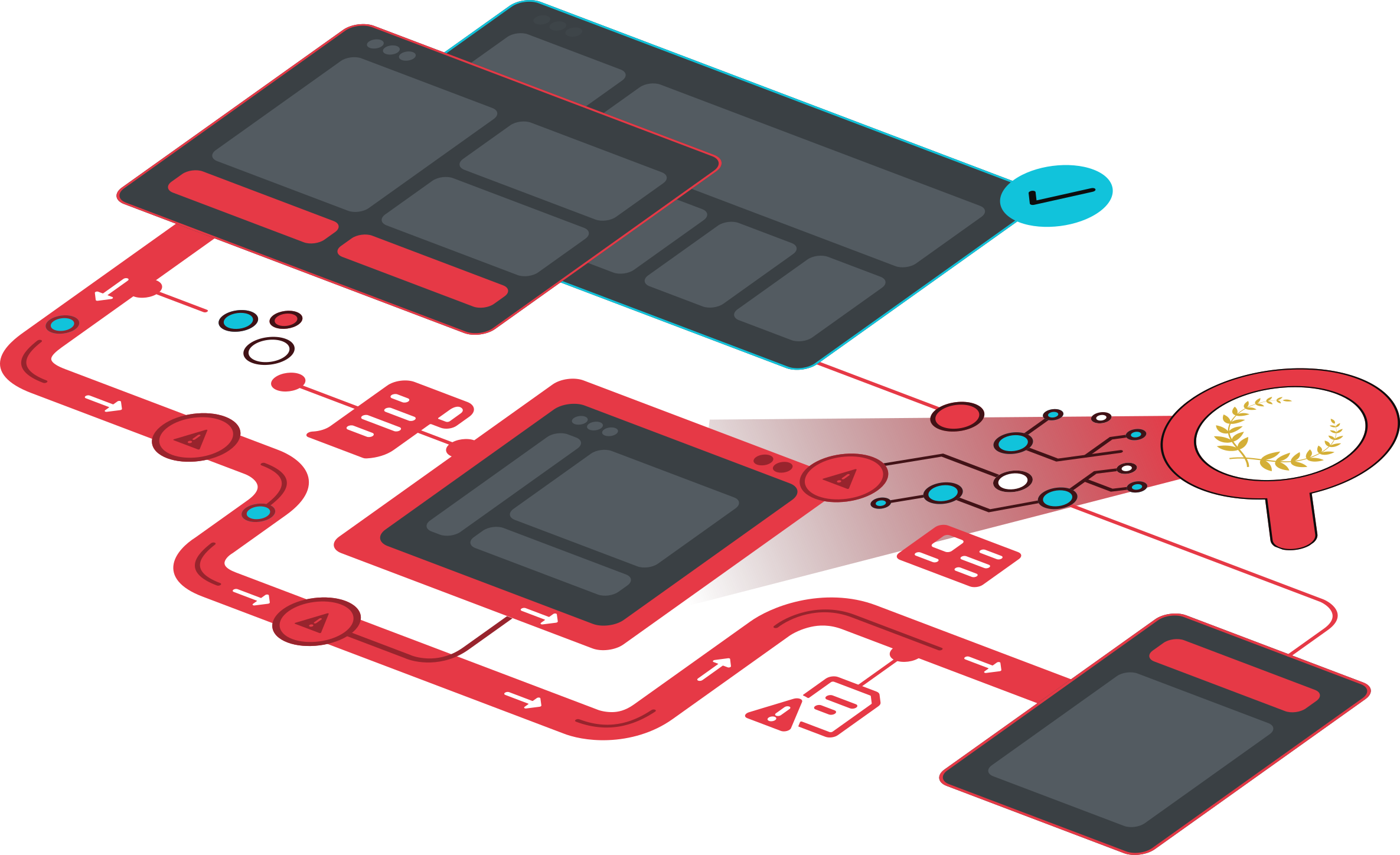
Application Penetration Testing
Identify security risks in design, implementation, and configuration of web and mobile applications, from OWASP Top 10 to complex multi-step attack chains.
FRAMEWORKS: OWASP Top 10 · ASVS · MASVS
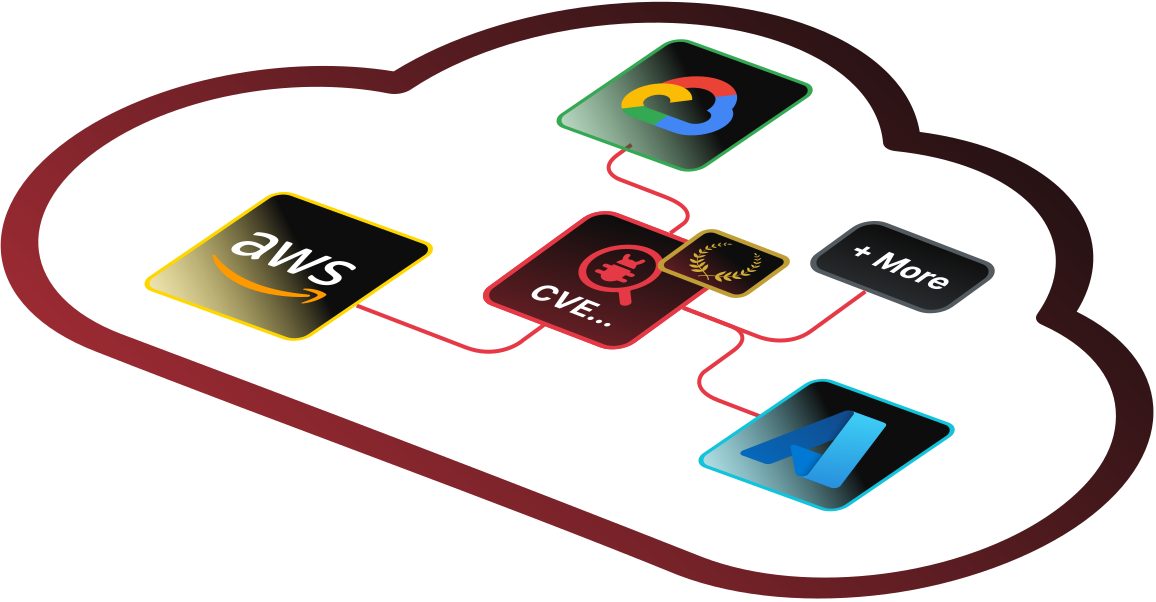
Cloud Penetration Testing
Our cloud security engineers combine offensive expertise with deep cloud knowledge, identifying unique vectors into and out of the cloud that go far beyond automated scanning.
FRAMEWORKS: CIS Benchmarks · AWS Well-Architected · MITRE ATT&CK Cloud

Network Penetration Testing
Comprehensive assessments covering external and internal penetration testing, simulating real-world attacks and insider threats across systems, Active Directory, and network infrastructure.
FRAMEWORKS: PTES · OSSTMM · MITRE ATT&CK
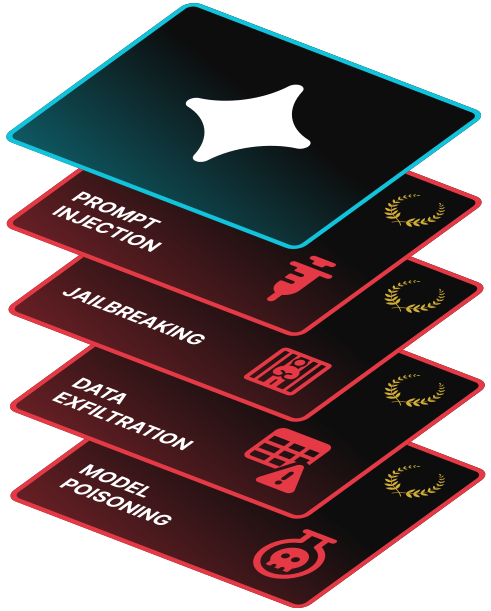
AI / ML & LLM Penetration Testing
Assess the full AI pipeline. UIs, APIs, RAG sources, agents, plugins, and vector databases, to uncover exploitable weaknesses from prompt injection to model poisoning.
FRAMEWORKS: MITRE ATLAS™ · OWASP LLM Top 10 · NIST AI RMF

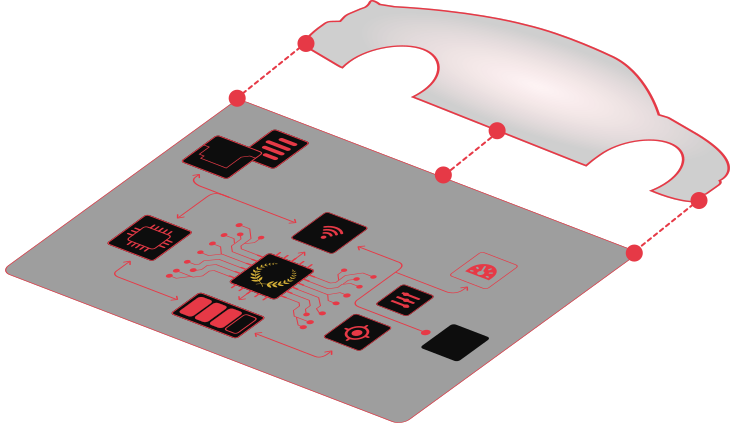
IoT & Hardware Penetration Testing
End-to-end assessment of your IoT ecosystem. From backend systems and hardware to mobile interfaces, using both commercial and bespoke Praetorian Labs tooling.
FRAMEWORKS: Frameworks: OWASP ISVS · IIC IoT Security Framework · FDA Premarket Guidance
Automotive Penetration Testing
From everyday connected vehicles to Level 4 autonomous R&D platforms, deep technical expertise in automotive security, balancing safety and functionality.
FRAMEWORKS: Frameworks: ISO/SAE 21434 · UNECE WP.29 · Auto-ISAC Best Practices
Why Praetorian
Elite Offensive Expertise
Decades of adversarial experience across the Fortune 500. Our engineers are experts in their craft, not generalists running automated scans.
Material Risk Focus
We prove impact, not theory. Our creative, adversarial approach uncovers the risks that automated tools and bug bounty programs miss.
Platform-Enabled Delivery
Our proprietary offensive security platform underpins every engagement, streamlining collaboration so engineers focus on high-value findings.
Platform-Enabled Delivery
Our proprietary offensive security platform underpins every engagement, streamlining collaboration so engineers focus on high-value findings.
How We Work
A proven process that delivers results, not just reports
Scoping & Threat Modeling
Collaborate to define objectives, map the attack surface, and build a custom threat model.
Active Testing
Expert engineers execute manual, creative testing using adversarial techniques, not just automated scans.
Analysis & Reporting
Findings validated, risk-scored for business impact, and delivered with actionable remediation.
Remediation & Verification
We guide fixes, re-test, and verify vulnerabilities are closed, completing the feedback loop.
Trusted by Industry Leaders


Ready to Find What Attackers Will?
Whether you need a single assessment or a continuous testing program, our engineers are ready to identify and validate the risks that matter most.